In the Casalgrasso area, along the Po River and near the confluence with the Varaita Stream, the attention of naturalists is typically focused on the riverine and wetland areas, rich in avifauna monitored by the Monviso Park. However, unexpectedly, a discovery of great value was made in the heart of the village, in the town hall building known as the “Castello” (Castle).
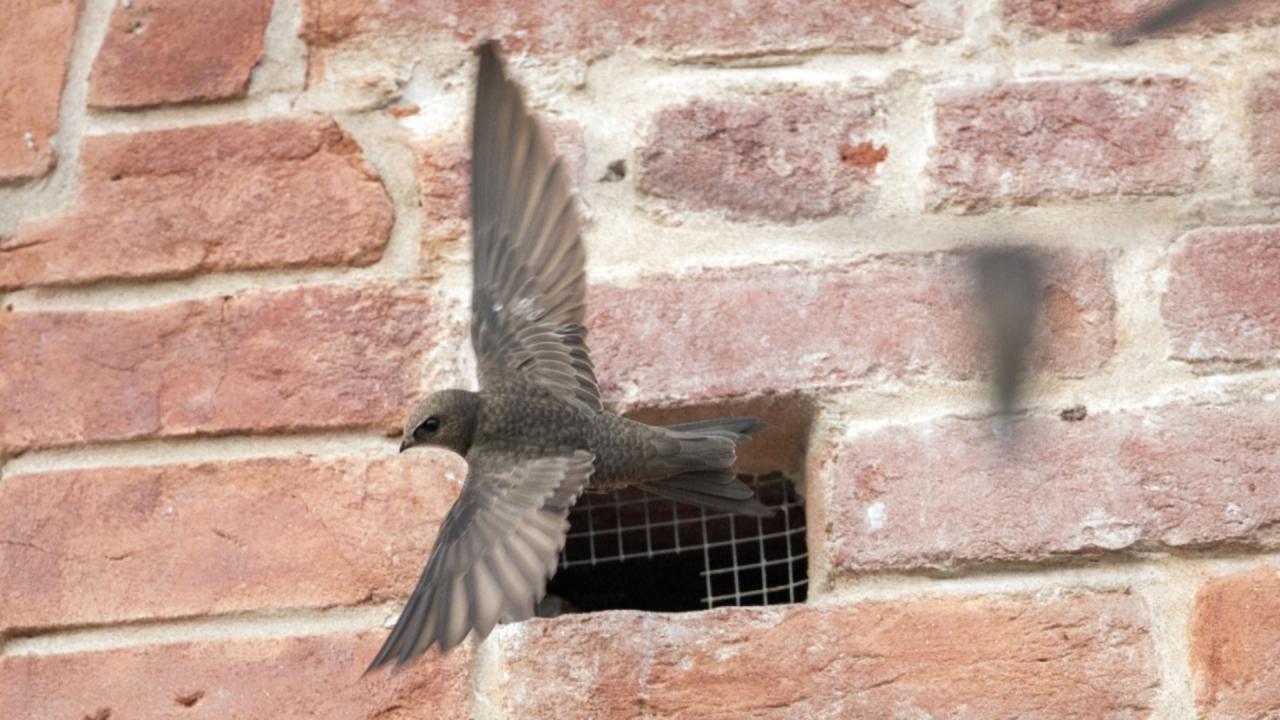
An inspection revealed that the numerous holes on the towers of the building were not decorative elements, but rather ancient "passerine nests"—structures designed to house colonies of birds. The presence of hundreds of small metallic perches allowed for the identification of these nests as intended for sparrows, rather than swifts, which do not require perches to land.
These architectural features, widespread from the Middle Ages to the 20th century, were intended to promote bird nesting to take advantage of their colonies, especially for food purposes, with controlled harvesting practices that today seem surprisingly sustainable. In addition to their practical utility, these structures also held symbolic, religious, or auspicious meanings in different times and cultures, as evidenced by documented examples in Italy, Northern Europe, and the Ottoman world.
To read the article by Marco Rastelli, Davide Rossi, and Mauro Ferri (in Italian), visit the Piemonte Parchi website: https://www.piemonteparchi.it/cms/index.php/territorio/architettura/item...
Photo credit: Pallid swift (Apus pallidus) - Photo by Batti Gai